You could probably count on one hand the amount of Premier League caretaker managers that get appointed on a permanent basis by Premier League clubs.
Alan Shearer, Eric Black, Terry Connor and Steve Agnew are amongst the names that perhaps rightly didn’t get a crack at full time management, but there are names out there that have unfairly missed out.
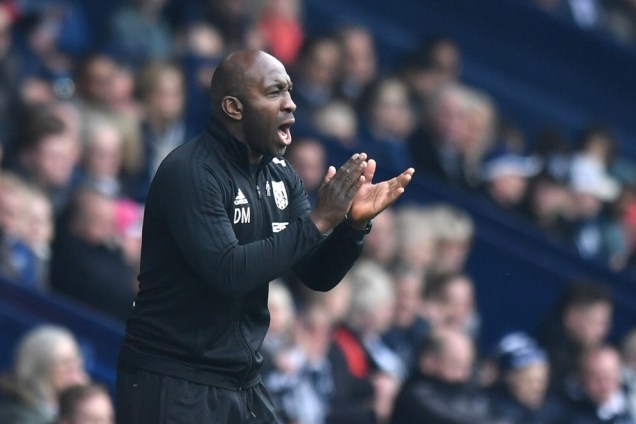
Darren Moore at West Brom is one of the names that could fall into the latter category by the end of the season – he is currently contracted until then with no word yet about his future beyond that.
It is very early days in Moore’s reign at the Baggies but they have already won at Old Trafford and picked up a point against Swansea in a game they arguably could have won.
Players like Ben Foster and James McClean have spoken about the influence of Moore both in the dressing room and out on the pitch, with McClean saying the players “knew what they were doing” and that they are all “pulling in the right direction”.
Of course Moore would be a risky appointment, with no previous managerial experience, but before this spell as caretaker manager he was first team coach, as well as making over 100 appearances for Albion during his playing career, so knows the club inside out.
But when you look at the recent records of Premier League clubs who have appointed more experienced managers post-relegation, it does not make for good reading.
This season, Middlesbrough sacked Garry Monk in December whilst Leonid Slutsky and Simon Grayson had both departed Hull and Sunderland by the end of November.
Last season, Roberto Di Matteo has his Aston Villa contract terminated after a 2-0 defeat at Preston in October.
Those that have held onto their managers post-relegation have generally had more success, with Rafa Benítez guiding Newcastle to the title last season.
Whereas Benítez, being a world class manager, could most likely have got any side firing in the second tier, there is some merit to the argument that being given time to assess the squad towards the back end of a relegation season before rebuilding is a good way to succeed.
Newcastle is probably the best example of an inexperienced coach taking a club back to the top flight, with Chris Hughton achieving that feat in 2010 in what was his first job in management.
He then went on to achieve relative success at Birmingham, guiding them into the play offs in his only season in charge in 2011, before of course taking Brighton up to the Premier League six years later.
Another reason to potentially appoint Moore is the off-field turmoil that circles West Brom at the moment.
Alan Pardew’s reign at the club was a disaster and the chairman John Williams was removed from his role last month, with technical director Nicky Hammond resigning last week after a spate of poor transfers.
Appointing Moore would maintain stability and ensure that a connection between the playing staff and the fans could be present, something that may be crucial as West Brom look to bounce back to the top flight at the first time of asking.
The Baggies will need a miracle to survive relegation this campaign but if the players can, as McClean says, continue to pull in the same direction as their manager, it would surely be a risk worth taking for West Brom to appoint Moore.
 RS Sport